How Is Modern Dental Technology Quietly Redefining Patient Comfort?
For many people, the idea of a dental appointment still brings back memories of noisy drills, uncomfortable impressions and long visits in the chair. Dentistry, however, has changed dramatically. Today, modern dental technology is transforming patient comfort in ways that feel subtle but significant. From digital imaging systems to minimally invasive dentistry techniques, contemporary dental equipment is reshaping how care is delivered and experienced.
The shift is not about flashy gadgets or bold claims. It is about creating a supportive dental environment where clinical assessment tools, digital dentistry workflows and comfort focused dentistry approaches work together to improve the overall appointment experience. Let us explore how technology in dentistry is making visits feel more manageable, more informed and more tailored to individual needs.
How Are Digital Diagnostics Enhancing Comfort From The Start?
A comfortable appointment often begins long before treatment. It starts with clear communication and accurate information.
Modern diagnostic imaging systems such as digital radiography and Cone Beam Computed Tomography provide detailed visualisation of teeth, bone and surrounding structures. Compared to traditional film radiography, digital systems may reduce radiation exposure while allowing images to be viewed instantly on screen. This can reduce the need for repeat images and support more efficient appointments.
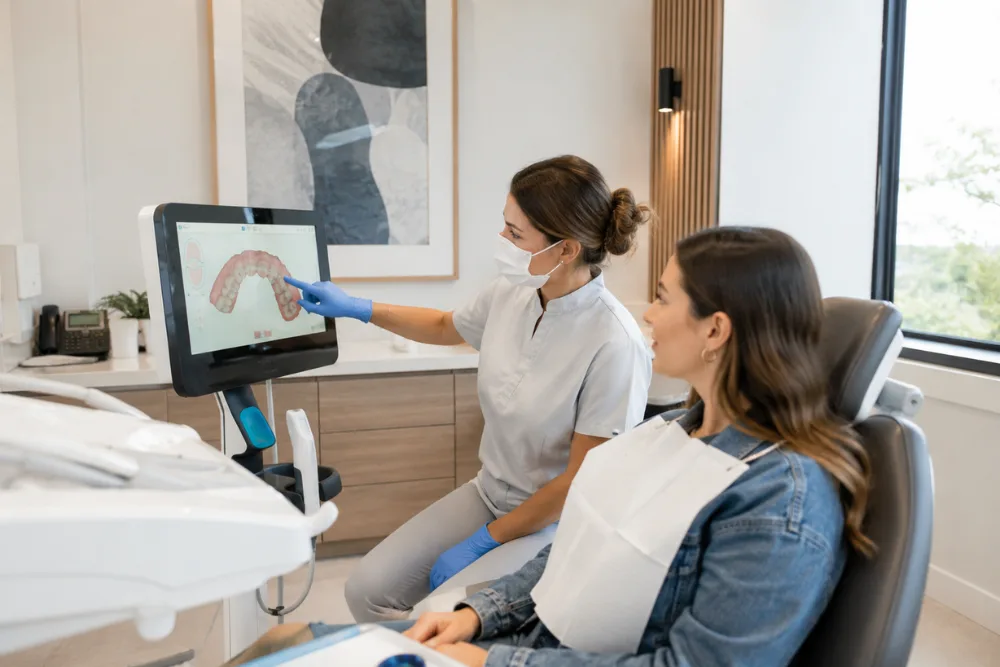
Intraoral cameras and intraoral scanners also play an important role. Rather than relying solely on explanation, clinicians can show images directly to patients. This visual patient education approach supports discussion of clinical findings and encourages informed treatment planning says leading dentist The Hill.
Below is a comparison of key diagnostic technologies and their comfort related attributes.
| Technology | Patient Impact | Neutral Description |
| Digital radiography | Reduced need for repeat images | May reduce exposure compared to traditional film radiography |
| Cone Beam Computed Tomography | Detailed three dimensional views | Provides additional anatomical information for assessment |
| Intraoral camera | Visual explanation of findings | Supports discussion of clinical findings |
| Intraoral scanner | No traditional mould material | Eliminates need for impression trays in many cases |
Digital dental imaging and 3D dental imaging systems support early detection and allow for computer guided implant planning and computer guided surgery where appropriate. This level of planning can contribute to predictable clinical processes and streamlined appointment workflows.
Why Does Minimally Invasive Dentistry Feel Different?
Minimally invasive dentistry focuses on preserving healthy tooth structure wherever possible. Technology allows for more conservative preparation methods and precision based instrumentation.
Electric handpieces are designed to operate more smoothly than older air driven systems. Many patients notice reduced vibration and lower noise levels. Rotary endodontics and electronic apex locators support efficient canal shaping during root canal treatment, which may improve procedural efficiency.
Dental lasers and air abrasion dentistry are used in selected procedures where clinically appropriate. Laser assisted dentistry can support targeted tissue management, while air abrasion may allow conservative removal of decay in suitable cases.
Here is a closer look at treatment related technologies and their comfort focused attributes.
| Technology | Comfort Related Feature | Neutral Description |
| Electric handpiece | Reduced vibration | Designed to operate more smoothly than older systems |
| Rotary endodontics | Efficient shaping | May improve procedural efficiency |
| Dental laser | Targeted tissue management | Used in selected procedures where clinically appropriate |
| CAD CAM dentistry | Same day restoration in suitable cases | Allows fabrication during a single visit when indicated |
| Digital impressions | No tray material | Uses scanning instead of traditional moulds |
CAD CAM dental restorations and same day crown technology allow for chairside fabrication of restorations when clinically suitable. For some patients, this reduces the need for temporary crowns and multiple visits.
What Role Does Technology Play In Reducing Dental Anxiety?
Reducing dental anxiety is a priority in modern practice design. Comfort focused dentistry often combines equipment, environment and communication.
Noise reduction dental equipment, low noise suction systems and dental chair ergonomics contribute to a calmer setting. Ceiling mounted screens and noise cancelling headphones can support distraction during procedures.
Local anaesthetic delivery systems have also evolved. Topical anaesthetic gel is commonly used before injection to reduce surface discomfort sensation. Computer assisted anaesthesia systems are designed to regulate anaesthetic flow rate, providing controlled delivery.
For suitable adult patients, nitrous oxide sedation dentistry may be considered following assessment. Pain management options in dentistry are always tailored to individual circumstances and require discussion of suitability, risks and alternatives.
Some supportive comfort features include:
- Temperature controlled rooms
- Rubber dam isolation technique for moisture control
- Magnification loupes in dentistry for precision
- Integrated digital record management
- Clear explanation using digital smile design software
These features work together to create a supportive dental environment where patients feel informed and heard.
How Does Modern Equipment Improve The Overall Appointment Experience?
Technology is not only about treatment. It also influences how smoothly appointments run.
Digital record management systems reduce paperwork and allow faster retrieval of information. Integrated software planning systems assist in organising care pathways. Streamlined appointment workflows can reduce waiting times and improve efficiency.
Infection control technology such as autoclave sterilisation systems is another important part of contemporary dental equipment. Although often unseen, sterilisation technology and strict protocols contribute to patient confidence and safety.
The focus remains on evidence based dental techniques, balanced information and transparent communication. Patients are encouraged to understand their options, including benefits, limitations and variability of outcomes.
How Is Technology Supporting More Personalised Treatment Planning?
Digital dentistry allows treatment to be planned with greater detail. Computer guided implant planning, electronic apex locators and digital radiography provide information that supports clinical decision making.
Digital smile design software and CAD CAM systems assist in visualising restorative outcomes. While outcomes vary between individuals, the ability to preview and plan helps set realistic expectations.
Minimally invasive dentistry and conservative preparation methods aim to preserve healthy structure. This approach, combined with advanced imaging and magnification, supports precision and thoughtful care.
Why Should Patients Look For A Technology Driven Yet Balanced Approach?
Modern dental technology advancements offer many potential advantages, but suitability varies between individuals. Not every tool is appropriate for every patient or every procedure.
A balanced approach includes:
- Comprehensive assessment
- Discussion of alternatives
- Clear explanation of risks and recovery expectations
- Individualised planning
- Ongoing monitoring
The goal is not to promise perfect results but to provide accurate, realistic and educative information about options.
Where Can You Experience Contemporary Dental Care In Newcastle?
If you are curious about how digital dentistry and comfort focused dentistry can support your oral health journey, Newcastle Dental offers a contemporary environment where patient comfort and clinical precision work together.
At Newcastle Dental, the integration of digital radiography, intraoral scanning technology, CAD CAM systems and advanced clinical assessment tools allows for detailed treatment planning tailored to individual needs. The team prioritises clear communication, balanced information and a supportive dental environment. Whether discussing minimally invasive dentistry, digital impressions or options for managing dental anxiety, every conversation centres on helping patients make informed decisions about their care.
The focus remains on thoughtful, personalised treatment supported by modern dental technology and contemporary dental equipment. By combining innovation with professional standards and compassionate communication, Newcastle Dental provides a setting where patients can feel confident that their comfort and wellbeing are taken seriously.
References
Australian Dental Association
Dental Board of Australia
Australian Commission on Safety and Quality in Health Care
Australian Radiation Protection and Nuclear Safety Agency
Frequently Asked Questions
How does digital scanning improve comfort during dental treatment?
Digital scanning replaces traditional impression trays in many cases. This eliminates the need for mould material in the mouth and can make the process feel more manageable for some patients.
What is Cone Beam Computed Tomography used for in dentistry?
Cone Beam Computed Tomography provides three dimensional images of teeth and surrounding structures. It supports detailed assessment and treatment planning where appropriate.
Are same day crowns suitable for everyone?
Same day crown technology using CAD CAM systems may be appropriate in certain clinical situations. Suitability depends on individual assessment and discussion of options.
Can modern dental technology reduce dental anxiety?
Technology such as noise reduction equipment, digital communication tools and supportive sedation options may contribute to a calmer experience. Individual needs vary, so assessment and discussion are important.
Is laser dentistry available for all procedures?
Dental lasers are used in selected procedures where clinically appropriate. Your clinician will advise whether this option is suitable for your circumstances.
Does modern equipment mean there are no risks?
All dental procedures involve potential risks and variability of outcomes. Modern equipment supports planning and precision, but individual responses and healing differ from person to person.
Disclaimer
All dental procedures involve potential risks and benefits. The information provided in this blog is general in nature and should not be taken as medical advice. We recommend that you seek guidance from a suitably qualified health professional before making decisions about your oral health. Where appropriate, you may also wish to consider obtaining a second opinion.
Any images or videos featured are shared with the informed consent of our patients and are intended for educational purposes only. They are not a guarantee of results, as every patient is unique. Treatment outcomes — including recovery, potential complications, and effectiveness — can vary from person to person.